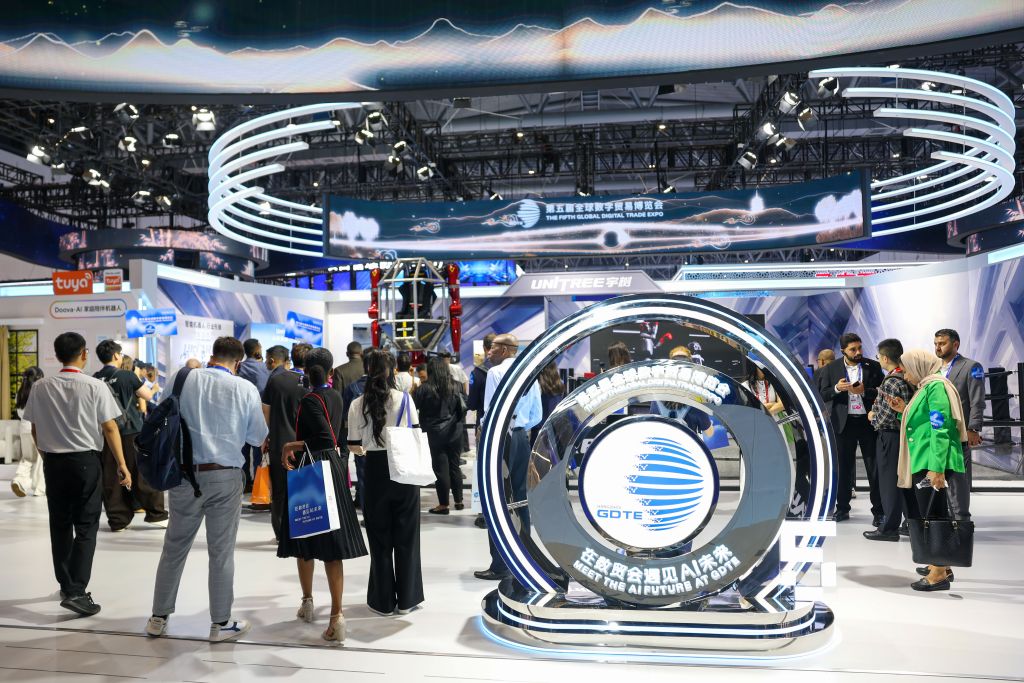



On August 20, Zhang Feng, Party Secretary of the Board of Directors of the China Electronics Society and Chairman of the China Humanoid Robots and Intelligent Hundreds Association, released the "2026 Humanoid Robot Industry Development Report" at the 2026 World Robot Conference.
The report provides an in-depth analysis from the five dimensions of industry overview, development trend, technical services, industrial chain and product application scenarios. The report introduces the definition, strategic significance and future trends of humanoid robots, and focuses on the development of five countries: China, the United States, Germany, South Korea and Japan. In addition, the report systematically combed the core technology system of humanoid robots, mapped the industrial chain products in detail, and comprehensively analyzed seven typical application scenarios.
The report pointed out that technological innovation has entered a new stage of "cluster emergence", technology has accelerated iteration, and the pace of high-end and intelligent machine products has accelerated. The capabilities of humanoid robots such as environmental perception, planning and decision-making, and motion control have been continuously enhanced, and their adaptability and stability in complex environments have continued to improve. At the same time, the industrial chain has achieved a double leap between "quality efficiency and energy level", forming a full industrial chain manufacturing capacity from key chips and components to the whole machine.
In terms of industry applications, humanoid robots have moved from small batch production to normalized deployment and large-scale applications. In the first half of 2026, China's humanoid robot shipments have exceeded 40,000 units, and the global proportion has further increased to 97%. In terms of ecological construction, the construction of a "four-in-one" industrial ecosystem led by standard development, based on talent cultivation, expanded by international cooperation, and guaranteed by the construction of innovative infrastructure is accelerating.
Humanoid robots look and behave similar to humans, with some or all human characteristics, including head, torso, limbs, movements, expressions, language, and intelligence. It is the product of the deep integration of artificial intelligence and robots, and is regarded as the best embodiment of physical intelligence. It is expected to become another disruptive product after computers, smart phones, and new energy vehicles. Humanoid robots will play an important role in manufacturing, warehousing, logistics, emergency rescue, home services, medical care and other fields, profoundly changing human production and lifestyle.