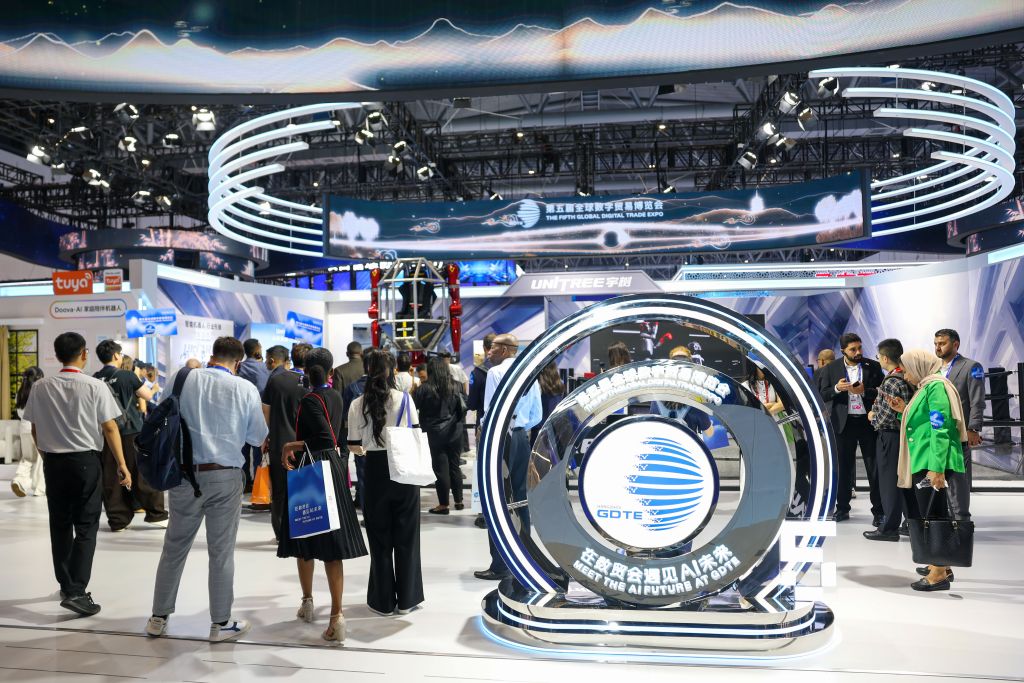



At the 2026 World Robot Conference, the display of robots attracted a large audience. In addition to intuitive walking, handling and grabbing movements, the competitive focus on the next phase of the robot has shifted from “body” to “brain”. During the conference, a roundtable discussion was held on the theme “Realistic Distance from the World Model to Serving Humanity”. Wang Jian, director of Zhijiang Laboratory and founder of Alibaba Cloud, asked: How is the world model different from other models, and what are the technical routes worthy of attention? Discussion quickly turned to more realistic questions - what capabilities are needed if the world model is to serve humanity, and how far is it from that now?
The current robotics industry is facing this dividing line. Robots have significantly improved their athletic abilities over the past few years. Huang Yuanhao, founder of Obi Zhongguang, pointed out that the robot's mobility is already good, and the real difficulty is operation. Moving from point A to point B is not the same type of problem as unscrewing a bottle cap or handling a complex object. The latter relies on the coordination of the hand, the eye, and the brain. The hand needs dexterity and touch, the eye is responsible for perception, and the brain relies on model and data iteration.
As robots move from "moving" to "working", industrial competition has also shifted from purely ontological capabilities to intelligent capabilities. The world model is valued in this context. Today's robots can be trained to do more and more tasks, but increasing skills doesn't equate to being smarter. Zhicheng AI founder Hu Luhui believes that the main problems facing physical intelligence are generalization ability, understanding of physical laws, and understanding of the task itself. In past systems, interaction objects and task boundaries were relatively determined, and the original capabilities may fail once the environment changes.
Zhang Yupeng, founder of Unbounded Dynamics, mentioned that the imitation learning paradigm relies on a large amount of data to form a similar ability to "muscle memory", but there are still challenges to the underlying logical understanding of the physical world. Hu Luhui stressed that the world model needs to address not only generalization, but also an understanding of the physical world. He believes that robots should do things in an understanding way, not just accomplish tasks.