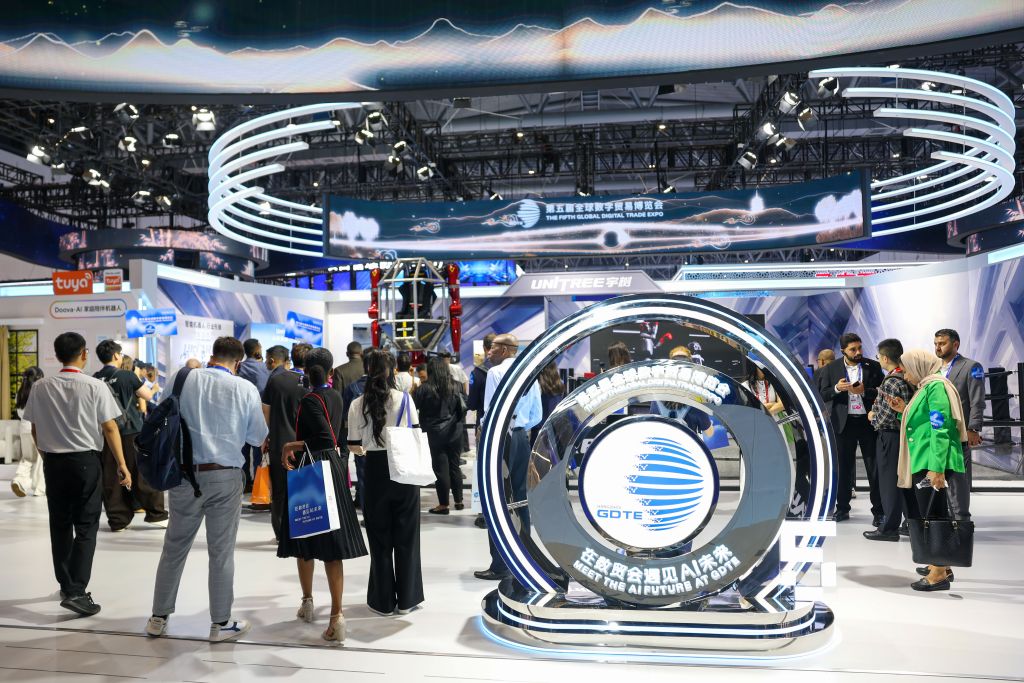



From August 22 to 26, the second World Humanoid Robot Games were held at the National Speed Skating Oval, drawing top humanoid-robot teams from around the globe. This year's event expanded significantly over the first edition: the number of competition events grew from 26 to 51, participating teams from 280 to 666, and robots from about 500 to 2,056, with the schedule extended from three days to five.
The games were divided into two categories: athletic competitions and scenario competitions. The athletic events - track and field, long jump, weightlifting and more - tested robots' decision-making ability, coordination and the performance of core components; the scenario events took place in real industrial, household and logistics environments, examining robots' functionality and adaptability in concrete application settings.
Several Sichuan teams appeared at the games for the first time, including local companies such as Sichuan Embodied Humanoid Robot Technology Co. and Sichuan Tianlian Robot Co., along with the "Sichuan detachment" of Agibot (Zhiyuan Innovation) of Shanghai. Through the competitions, these teams not only demonstrated technical strength but also gained valuable experience and insight.
Spectators could clearly feel that the robots' "athletic ability" had improved dramatically. In the 100-meter race, for example, a robot clocked 9.39 seconds - breaking the human world record. Robots also set fresh marks relative to human athletes in the 400 meters, 1,500 meters and long jump. Peng Bei, a professor at the University of Electronic Science and Technology of China, said the breakthroughs owed to improved algorithms and hardware iteration that made robot techniques more mature, upgraded joint modules that delivered stronger explosive power, and material optimization that made body structure more rational.
Stability has also improved markedly. Last year many robots drifted off course; this year lane-crossing incidents dropped noticeably. Fang Rui, executive deputy director of the robot training innovation center at Tianfu Jiangxi Laboratory, explained that successive technology upgrades have given robots multiple navigation aids such as mapping and radar, greatly improving positioning accuracy.