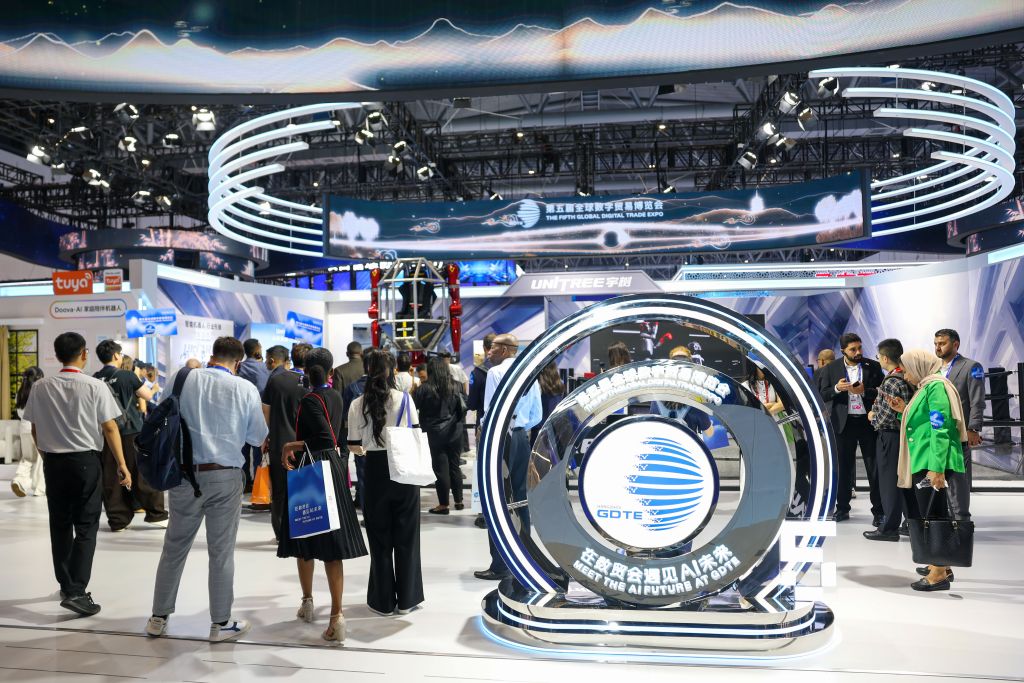



On August 19, the World Robot Conference opened in Yizhuang, Beijing. Everyone keeps complaining about traffic jams, and sure enough, I was late again. After two days at the exhibition, my biggest impression is that robots have started looking for jobs. In a hall of nearly 50,000 square meters, more than 300 companies showcased various application scenarios in factories, warehouses, restaurants and even living rooms. Robots sorted parcels, folded clothes, made coffee and cleaned cat litter, busy as newcomers eager to prove themselves. To get hired, they competed on speed, price and battery life, practically telling every customer they could rest less - or not at all.
But that is precisely where the problem lies: robots still have a long way to go before truly taking the job. One robot failed to pick up a ballpoint pen five times in a row, and onlookers were so anxious they wanted to lend a hand; a robot was kicked flying by a testing blogger and lay on the ground "twitching"; two robot dogs pretended to sniff each other while a human with a remote control stood behind each. On Chinese Valentine's Day (Qixi), a robot even "got married" in the exhibition hall, with the human officiant more excited than the groom. The hall was also packed with another crowd: children dragging suitcases to competitions at 8 a.m., investors asking around about supply-chain companies, and fresh graduates trying to job-hunt on the spot, submitting 40 resumes in one breath. There is a kind of hubbub and restlessness unique to an industry on the rise. Behind it lies massive capital inflows - embodied-AI financing records keep being broken, with over 100 billion yuan poured in as of July this year. Unitree Robotics hit a 444.9 billion yuan market value on its first trading day, and the next day founder Wang Xingxing appeared to speak, reminding everyone that the "ChatGPT moment" for embodied intelligence has not yet arrived. What we saw on the scene is not a mature robot world, but more like an early-arriving job fair. Every robot is desperately proving its usefulness, while humans watch, buy, invest and learn. Robots are getting closer to our lives, but still far from actually doing the work for us.
At this WRC, the job most robots had their eye on was parcel sorting. Logistics sorting has clear tasks, a relatively controllable environment, real demand and fault tolerance, and is currently the earliest commercialized and most refined scenario for embodied intelligence. Star Era has become a skilled worker, sorting 1,200 parcels per hour, and can accelerate to 2,000 per hour under customer pressure. Self-variable's two robotic arms sort up to 1,816 per hour at peak, and sometimes encounter deliberately placed non-parcel items, which the arms identify and push off the conveyor. Last year robots still frequently erred when flipping parcels; this year those problems were solved. Watching for a while, spectators felt a pang of sympathy, finding the sorting robots too human-like, like watching a hard-pressed worker.
Beyond parcel sorting, another frequently seen scenario is product sorting in pharmacies and retail stores. Currently robots are clearly unqualified for this job - taking a drink takes one or two minutes, and buying two items requires two trips. After touring this WRC, I found the place robots most want to enter is the home. Vendors are all trying to prove that robots are no longer just lab machines but can enter real life. Booths are arranged like homes, with beds, tables, sofas and washing machines almost standard. Some exhibitors openly stated their goal: to let 10% of people worldwide own their own robot within 10 years.
Robots also began living a full-time nanny's day, demonstrating housework abilities such as folding clothes, changing bed sheets, handling dirty laundry, clearing floor clutter and preparing breakfast. Considering pet-keeping scenarios, there are also functions for removing cat hair and cleaning cat litter. But the biggest problem is they move too slowly - every action feels like watching a movie at 0.5x speed. There were also robots with smooth, highly efficient movements on site, but much of the time they relied on engineers' operation and training. An assembly line can standardize the environment, but a home cannot: clothes get thrown around, things get misplaced, and there is always some clutter on the table whose nature defies explanation. A constantly changing home remains too great a test for robots.
Dexterous hands are paying increasing attention to touch - fingers must feel objects and judge whether they have a secure grip. On site, robots could already be seen pinching fruit and picking up tiny items, movements much gentler than before. Dexterous-hand prices range from 6,666 to 99,999 yuan, showing the industry is still in its early stage. Lingxin Qiaoshou has completed seven rounds of financing with a valuation of 40 billion yuan, surpassing the robot-body manufacturers in the 20-billion-yuan club. At the WRC venue, you never know who you'll bump into next. Self-media blogger Fengge Wangming Tianya was negotiating with a robot over whether he could kick it, and in the end the robot fell to the ground "twitching." Fortunately, the WRC still had robot dogs to repair human-robot relations. At the booth of Vita Dynamics, cosplayers dressed as Yang Jian and Cruella played with robot dogs. Robot dogs also began socializing - two pups that met by chance stopped face to face and started sniffing each other, actually controlled by two humans each holding an operation handle.
At the WRC, humans were quite willing to believe robots have some abilities we ourselves cannot quite explain, such as fortune-telling. Lines formed at the booth where robots draw lots. On the day of the visit, which happened to be Qixi, we even received wedding candies from two robots. The groom was slowly dropping to one knee to offer flowers, while an impassioned human officiant had already begun asking the bride: "Do you take him?" Falling in love and getting married were not enough - robots were also assigned artistic personalities. Forming bands, painting, singing and making intangible cultural heritage made people wonder why we work overtime every day while robots begin pursuing artistic ideals. Back to reality, robots have not yet learned to share our lives, yet humans can hardly wait to design lives for them. At least for now, the busiest are still us.