


August 24, 2026, may well be remembered as one of the most consequential days in the history of China's electric vehicle industry. Within a single 24-hour period, three major Chinese EV manufacturers unveiled significant milestones that collectively illustrate the accelerating pace of innovation and global expansion among Chinese brands.
BYD's Da Han EV — a full-size luxury sedan measuring 5,256mm in length with a 3,130mm wheelbase — arrived at dealer showrooms across China. The flagship model's standout specifications include up to 1,008 km of CLTC range from its 102.326 kWh battery pack, a 9-minute charging window from 10% to 97%, and dual-motor AWD output of 570 kW (764 hp). The Da Han's interior features a Devialet 31-speaker audio system, ceiling-mounted rear screen, zero-gravity rear seats with massage and heating/ventilation, and a built-in refrigerator — a specification package targeting executive and chauffeur-driven buyers.
On the same day, Xiaomi formally announced its Xring D100, a 3-nanometer AI driving chip developed entirely in-house. The D100 targets mass-market commercialization in 2027 and represents Xiaomi's vertical integration strategy extending from smartphones into automotive-grade silicon.
Meanwhile, Zeekr announced that its 7X SUV has surpassed 200,000 global orders across more than 50 countries and regions. The 7X's international success — achieved in markets as diverse as Europe, Southeast Asia, and the Middle East — signals the growing competitiveness of Chinese premium EVs in global markets beyond China.
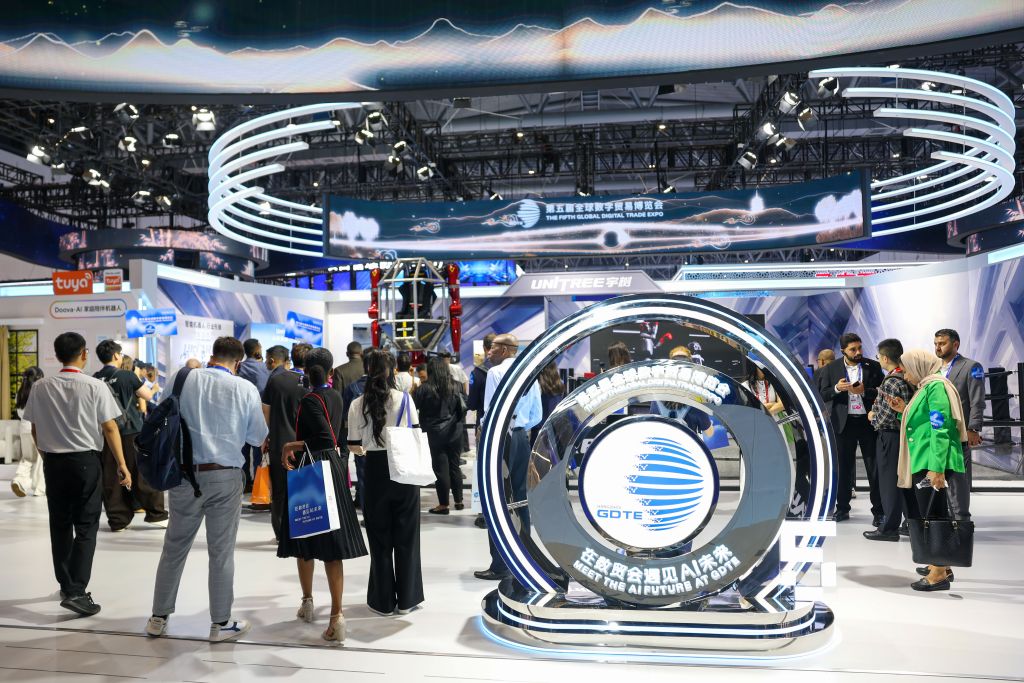
Image: Japan Mobility Show 2025 automotive technology. Source: Wikimedia Commons (CC BY 4.0).