


China's AI core industry is approaching a scale of 600 billion yuan (approximately 85.58 billion US dollars), according to research from the Chongyang Institute for Financial Studies at Renmin University of China. The figure reflects the rapid maturation of China's AI ecosystem, from foundational research to commercial deployment.
The growth is being driven by breakthroughs across multiple dimensions of AI technology. Large language models from companies including Alibaba, ByteDance, DeepSeek, Zhipu AI, and Moonshot AI are achieving state-of-the-art performance while being offered at a fraction of the cost of Western alternatives. Algorithmic innovations are enabling more efficient training and inference, reducing the computational resources required for AI deployment.
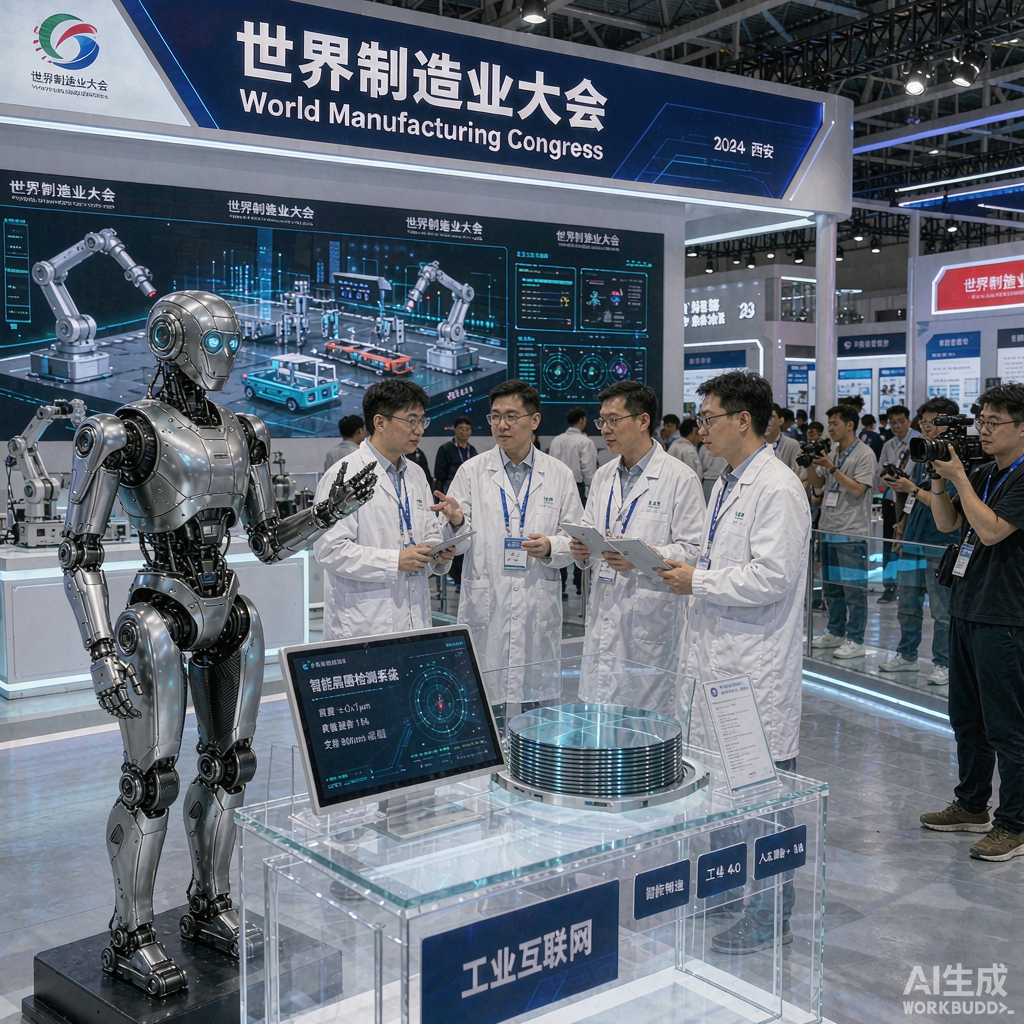
The application layer is where the 600 billion yuan scale becomes most visible. AI is being deployed across virtually every industry in China: in manufacturing for quality control and predictive maintenance, in healthcare for medical imaging and drug discovery, in finance for risk assessment and algorithmic trading, in agriculture for precision farming, and in transportation for autonomous vehicles and traffic management.
China's AI industry benefits from several structural advantages: the world's largest internet user base providing massive datasets for training, a deep pool of AI research talent, strong government policy support including the 4 trillion yuan computing infrastructure investment in the 15th Five-Year Plan, and an aggressive open-source strategy that is building global developer ecosystems around Chinese models.
The 600 billion yuan figure also reflects the multiplier effect of AI — where AI capabilities enable new products and services that themselves generate economic value. As AI agents become more capable and embodied AI products enter the market, the total economic impact of China's AI industry is expected to be several times larger than the core industry figure suggests.
Industry analysts predict that China's AI core industry could exceed 1 trillion yuan by 2028, driven by continued model capability advances, expanding application scenarios, and the maturation of AI agent and embodied AI technologies.