


China's AI innovation ecosystem is coming into focus as the technology moves from laboratory demonstrations into industries and daily life, according to a report published on November 16.
The latest Spark X2.6 model has overcome long-distance training and inference challenges on domestically developed chips, reaching expert-level performance in education and vertical medical applications. Meanwhile, water-cement giant Conch Group, in partnership with Huawei, has built the cement industry's first industrial large model, identifying more than 200 potential AI scenarios and deploying over 40 mature applications. At its Wuhu plant, large models predict clinker strength with over 85 percent accuracy, shifting quality control from after-the-fact testing to real-time process adjustment.
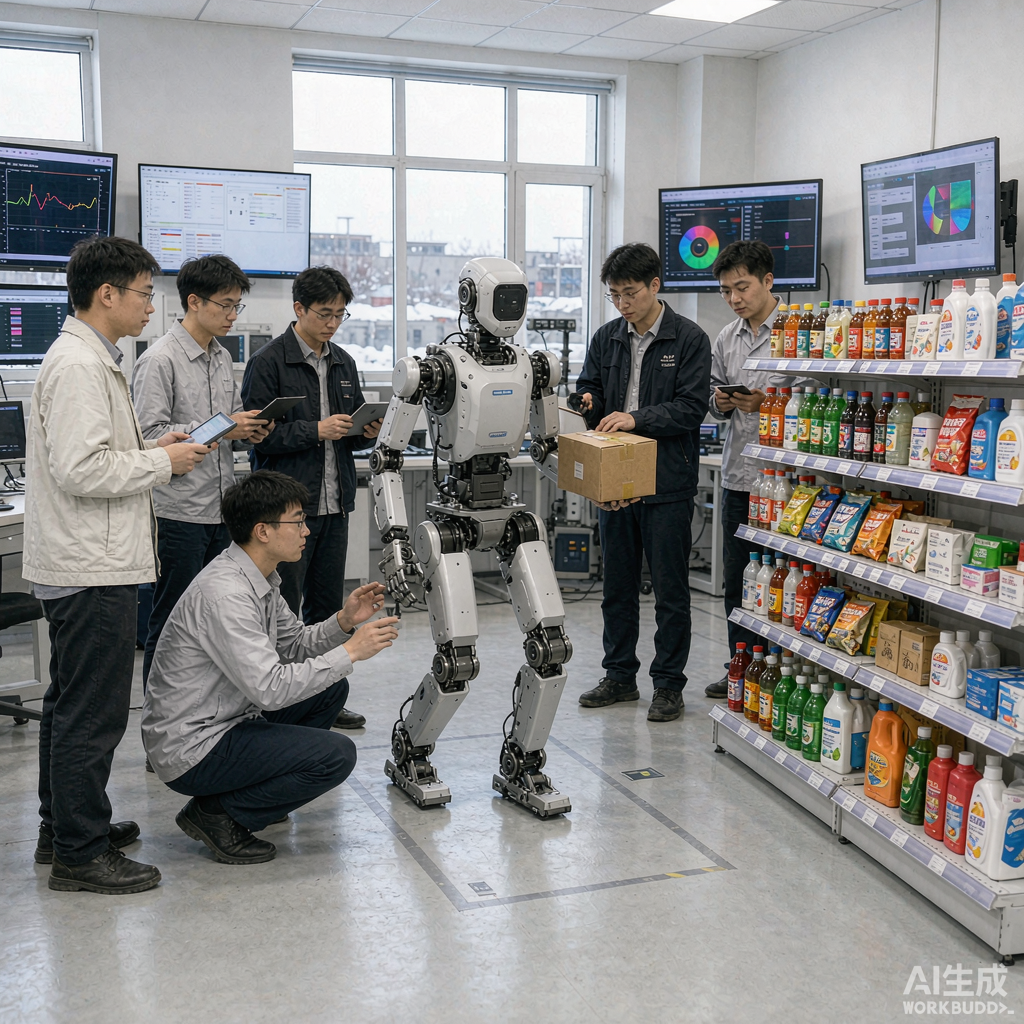
In scientific research, a 'robot chemist' at the University of Science and Technology of China runs experiments 24 hours a day. Powered by an in-house research agent, the center has closed the loop of 'large models proposing hypotheses, small models verifying, robots experimenting autonomously, and iterative optimization,' offering researchers a unified intelligent entry point.
AI vision inspection equipment from a specialist firm achieves measurement precision of two microns, while lightweight models are deployed to edge devices to cut computing energy consumption. Observers said AI is evolving into social infrastructure, with its value increasingly judged by what it enables people to do in daily life rather than by impressive demonstrations.