VIP member

Tensile and impact tests were carried out on 800H superalloy specimens after solution treatment at different parameters, and the fracture appearance was analyzed. Results show that the solution temperature has a greater influence on the mechanical properties than the holding time.
Incoloy 800H, an Ni-Cr-Fe austenitic alloy first developed in 1949, retains a stable austenitic structure at high temperature, giving good high-temperature mechanical properties, hot-corrosion resistance, high creep-rupture strength and good hot workability. It is widely used in nuclear power, petrochemical and power-station equipment such as petrochemical piping, nitric acid condensers, steam heating tubes and large pressure vessels.
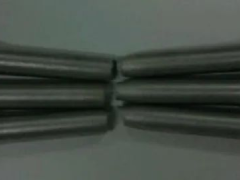
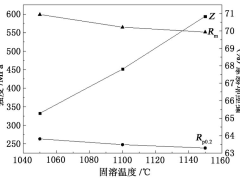
Test specimens were heated at 10 C/min to 1050 C, 1100 C and 1150 C, held for 1 h, 3 h and 5 h, then water quenched. Tensile tests showed obvious necking and a fracture angle of about 45 degrees to the tensile direction, indicating ductile fracture with excellent plasticity. As solution temperature increased, tensile and yield strength decreased slowly while reduction of area increased, i.e. ductility improved. Longer holding time reduced yield strength more obviously than tensile strength, with reduction of area still increasing but at a decreasing rate.
Impact tests also showed ductile fracture. Impact energy increased with solution temperature. Overall, both solution temperature and holding time reduce strength and increase ductility, with solution temperature being the dominant factor. Solution treatment dissolves carbide phases into the austenite and strengthens the solid solution, improving plasticity and toughness of the alloy.