VIP member

This article analyzes the process route and key parameters of cold expansion of UNS N08810 pipe OD, and examines the causes of cold-expansion cracks using optical microscopy, SEM, EDS analysis and thermodynamic curves. The analysis shows that a high solution-treatment temperature of the pipe blank, a wide grain-size range and abnormal mixed grains reduced the mechanical properties of the steel; brittle TiC films of large size formed along grain boundaries, providing a low-energy propagation path for cracks and increasing crack tendency. Multi-pass heavy-reduction cold rolling, together with controlled heat treatment and cooling, effectively refines the grains and reduces expansion/drawing cracks.
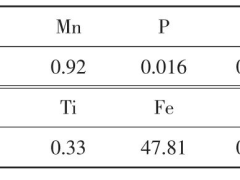
UNS N08810 is a face-centered-cubic corrosion-resistant alloy with about 30% Ni, 20% Cr and roughly 1% total Al+Ti. Its very low carbon content and higher Ti:C ratio improve structural stability, resistance to sensitization and intergranular corrosion, while the high nickel content gives excellent resistance to stress-corrosion cracking in aqueous environments and the high chromium content improves pitting and crevice corrosion resistance. It is widely used in heat exchangers, steam power turbines and oil and gas pipelines.
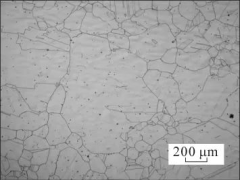
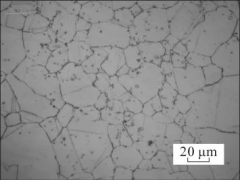
The conventional route is extrusion followed by cold rolling/drawing to finished size. For non-standard sizes such as 342 mm x 16 mm and 123 mm x 13 mm, cold expansion of 4-9 mm after extrusion is required, but severe fish-scale open cracks appeared on the outer surface. Metallographic examination showed abnormal mixed grains with grains up to about 600 um (ASTM 3.5) beside fine grains, a grain-size range over 5 levels. SEM + EDS confirmed gray-white blocky precipitates along grain boundaries composed mainly of TiC (Ti 42.15%, C 39.58%).
Countermeasures: adopt multi-pass large-reduction cold rolling instead of single-pass expansion, control solution-treatment temperature and cooling method, and refine the grain structure. With these measures, batch production of expanded UNS N08810 pipes was successfully achieved.